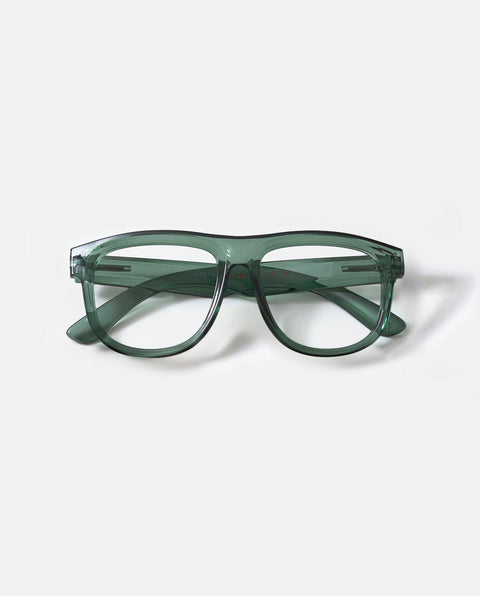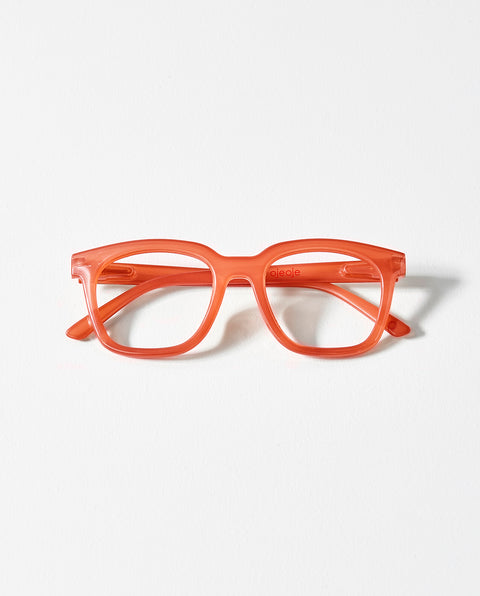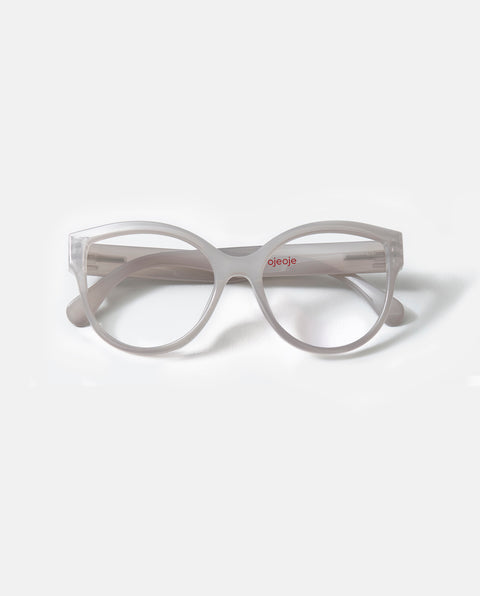




Have you experienced visual disturbances such as blurred vision, sharp flashes of light, or flickering in front of your eyes? Then you may have had ocular migraine and the uncomfortable symptoms that accompany it, but don't worry, it's more common than you think and often harmless. In fact, it could be due to something as simple as farsightedness, which can be corrected with a pair of reading glasses, helping to reduce eye strain that can cause ocular migraines.
What are visual disturbances?
Visual disturbances cover a range of symptoms that affect your vision. They can be experienced in many different ways, depending on the cause. Watch out for the 3 typical types of visual disturbances:
Blurred vision: A very common form of visual disturbance is blurred vision, which can be due to refractive errors such as astigmatism, nearsightedness or farsightedness. If you are farsighted, your vision will typically blur when you try to decipher text or an SMS at close range. In technical terms, it is called presbyopia and is caused by the eye's lens stiffening with age, reducing the eye's ability to focus on nearby objects. This is completely normal when you are 40+ and can be corrected with a pair of reading glasses.
At OjeOje, we have a large selection of reading glasses, ranging from round reading glasses, square reading glasses, small reading glasses, rectangular reading glasses or oversized reading glasses.
Regardless of whether you are nearsighted, farsighted, or have astigmatism, it is important that you have your vision corrected. If not, you will likely experience fatigue, headaches, or tension around your eyes due to the strain on your eyes, and your vision will deteriorate faster. We always recommend that you have your vision checked by an optician every year.
Flashes of light or flickering spots: If you experience visual disturbances such as sharp flashes of light, flickering spots, or luminous zigzag patterns in front of your eyes, it will often feel like an ocular migraine and can lead to headaches (migraines) and in some cases nausea and vomiting. Most visual disturbances are often harmless and can be caused by fatigue or stress. If you experience sudden visual disturbances or persistent changes in your vision, you should seek medical attention, as it could be a sign of serious illness.
Double vision: Another form of visual disturbance is double vision – also called diplopia, where the brain perceives one object as two because the brain receives two different images from each eye. Double vision can occur for many reasons – for example, lack of sleep or prolonged concentration. It can also be a sign of problems with the eye muscles or the nerve signals between the eyes and the brain. Double vision can also be caused by serious neurological problems, and if you experience this condition, you should be examined by a doctor. You should also seek medical attention if you repeatedly experience:
- Migraines
- Nausea or vomiting
- Pain around the eyes
- Drooping eyelids
- Weakness in the eyes
What is ocular migraine?
Ocular migraine, also called retinal migraine, is a type of migraine that triggers visual disturbances without necessarily causing you a headache. It is a relatively common condition that can affect both children and adults. Symptoms such as dark spots, sharp flashes of light, and flickering in front of the eyes can last from a few minutes to an hour and usually disappear on their own, and although it is unpleasant, ocular migraine is rarely a dangerous condition. Ocular migraine symptoms:
- Blurred vision
- Flashes of light or flickering spots
- Double vision
- Constriction of visual field
- Dark spots
- Zigzag lines
- Vision loss (this is very rare – but can occur during an attack)
Why does ocular migraine occur?
Ocular migraine occurs when there is a disturbance in the way your brain interprets visual impressions. This disturbance can occur for several reasons:
Fatigue: Ocular migraine can be caused by overexertion or lack of sleep.
Stress: High levels of stress can trigger ocular migraine.
Hormonal changes: Ocular migraine is more common in women and can be linked to hormonal changes, for example during menstruation, pregnancy, or when using birth control pills. Hormonal ocular migraine usually stops with menopause.
Diet and lifestyle: High alcohol intake, low blood sugar, and irregular meals can trigger migraine attacks.
Lighting conditions: Strong flashing lights or light sensitivity can also cause ocular migraine.
Incorrect prescription: Ocular migraine can also be a sign that you need glasses – or have an incorrect prescription in your glasses or contact lenses. If your vision correction is not correct, you force your eyes to work harder to focus, which can cause ocular migraine. This can often be solved with a pair of reading glasses of the correct strength if you are farsighted.
How to avoid ocular migraine?
Most ocular migraine attacks disappear on their own within an hour, and medical treatment is rarely necessary. But if you suffer from ocular migraine, you should pay extra attention to eating regularly and getting enough sleep. Avoid stress – and especially prolonged stress. You can also try resting in a dark and quiet room, or wearing sunglasses until the symptoms disappear.
If you experience frequent ocular migraine attacks, it may be a good idea to keep a diary of possible triggers to identify any patterns and try to avoid them. If ocular migraine occurs frequently or with very intense symptoms, you should contact your doctor.
Can glasses help with ocular migraine?
Remember to keep in mind that if your visual disturbances are due to common vision problems such as nearsightedness, farsightedness, or astigmatism, glasses can be the solution. If you are farsighted, a pair of reading glasses with the correct prescription can reduce eye strain, which is often what causes ocular migraine. We always recommend that you have your vision checked by an optician every year.
When should you seek help?
Although ocular migraine itself is not dangerous, it is important to pay attention to the symptoms you experience. If you experience sudden visual disturbances, especially if you lose vision for a short period or experience flashes of light and zigzag lines in your field of vision, you should contact your doctor or ophthalmologist immediately, as it could be a sign of something serious such as retinal detachment or a blood clot in the eye. Also seek medical attention immediately if, along with visual disturbances, you experience severe headache, disorientation, difficulty speaking, or weakness in the body.