
At OjeOje, we find that many people are unsure whether they are farsighted or nearsighted, as they often don't know the difference. We understand this – because it's also hard to spot. Read on to find out if you are farsighted or nearsighted...
What are farsightedness and nearsightedness?
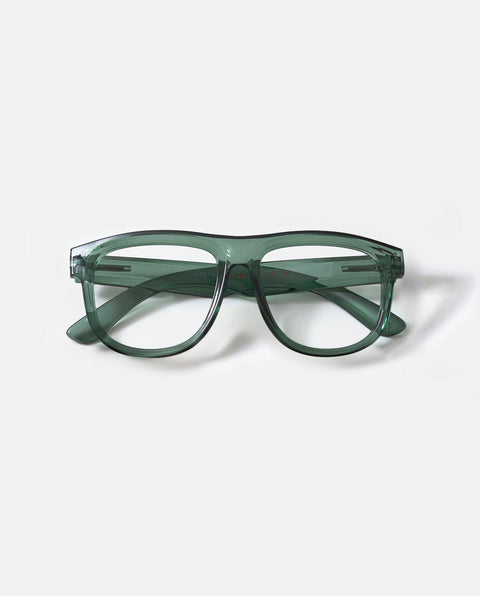
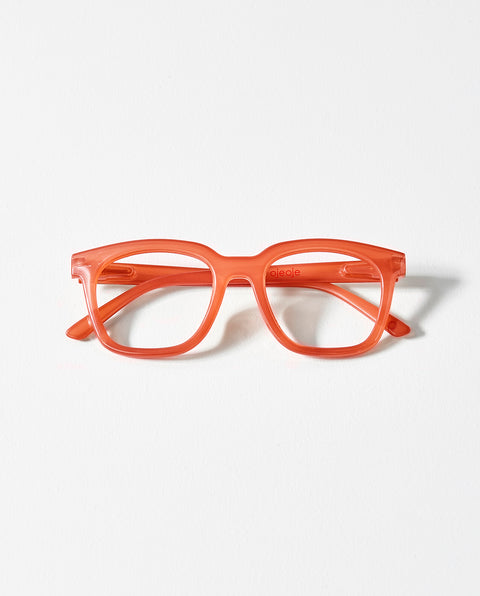
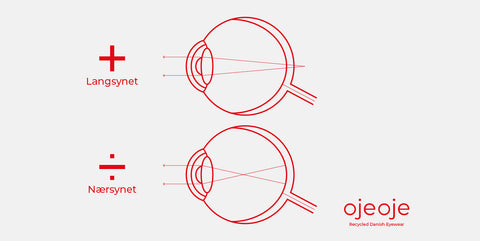
If you squint your eyes to see things that are far away, you will typically be nearsighted and need negative power glasses (-). If you are farsighted, you will often have difficulty seeing things that are close up – and you will need positive power glasses (+), also known as reading glasses or glasses with positive strength. This means that if you are nearsighted, you see best what is closest – and if you are farsighted, you see best things that are far away. If you are nearsighted, the image is formed in front of the retina, and if you are farsighted, the image is formed behind the retina. Both of these conditions mean you cannot see clearly and need glasses. If you are farsighted, a pair of cool recycled OjeOje reading glasses will help you see sharply again.
Get inspiration for your new reading glasses
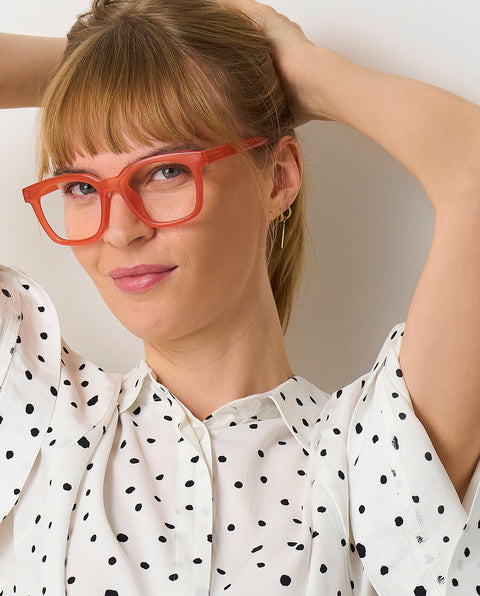
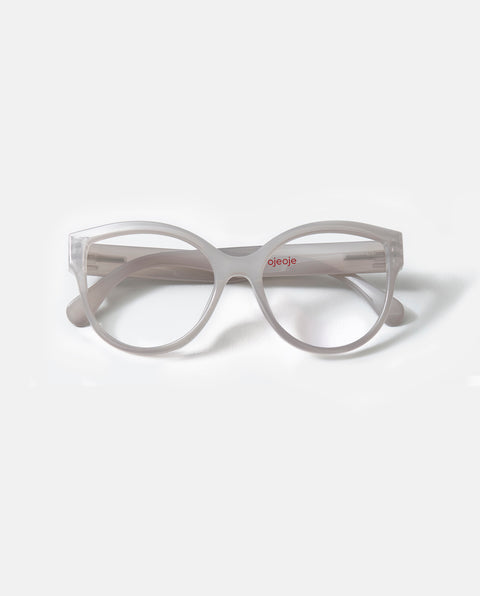
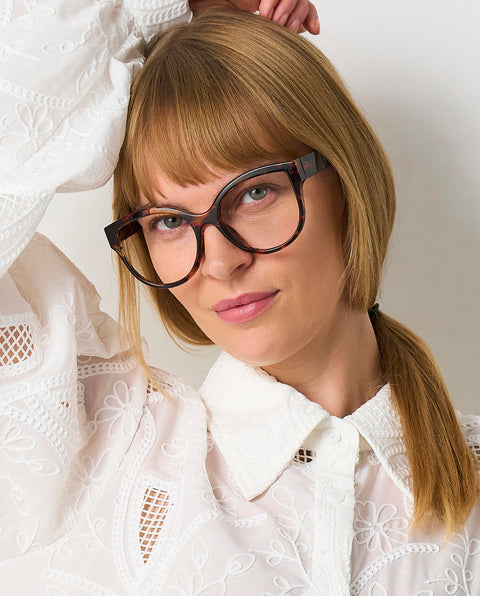
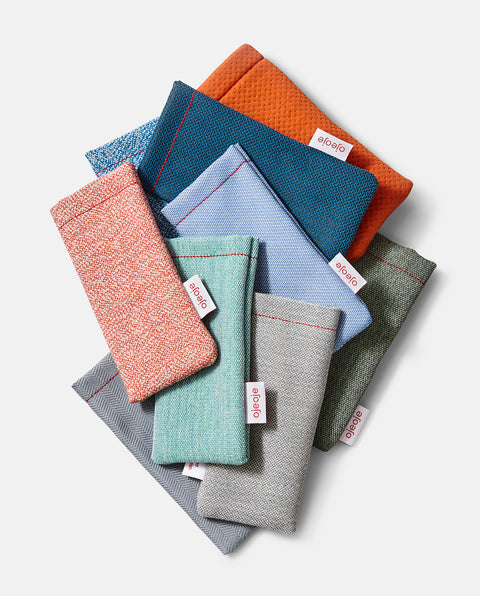
We have gathered all our reading glasses so you can easily spot your new reading glasses. See all our recycled reading glasses
Farsightedness and nearsightedness in Latin
Farsightedness is called hyperopia and nearsightedness is called myopia. The most important biological difference between the two is that when you are nearsighted, the image of what you see will be in full focus in front of the retina, instead of directly on the retina. In hyperopia, the images you form are focused behind the retina instead of on the retina.
What is farsightedness?
When you are farsighted, you might have to hold your phone or a book further away than usual to read the text. You will also have challenges reading the menu at a restaurant. You might also notice that a sign further down the street is easier to read than a sign next to you. When we are around 40-50 years old, most of us will have difficulty deciphering small print. In technical terms, this is called presbyopia and is due to the eye's lens stiffening with age, reducing the eye's ability to focus on close objects. This is completely normal, and most people will need reading glasses when there are between 40 and 50 candles on the cake.
What is nearsightedness?
If you are nearsighted, things closer to you will appear clearer, while things further away will seem blurry. For example, if you have to concentrate to see people at a distance, or to watch TV or a movie in the cinema, there is a high probability that you are nearsighted. You may also have difficulty reading street signs when driving. Nearsightedness is hereditary in families, and it usually begins to appear in childhood or adolescence.
How to avoid worsening vision
Regardless of whether you are nearsighted or farsighted, it is important to correct your vision. If not, you will likely experience fatigue, headaches, or tension around your eyes due to the strain on your eyes, and your vision will worsen faster. If you are farsighted, the problem can often be solved with a pair of reading glasses.
How is an eye test performed?
Whether you are farsighted or nearsighted is determined by an eye test at an ophthalmologist or optician. Visual acuity is measured in both of your eyes – both individually (monocularly) and together (binocularly). When your eyes are tested individually, it is important that the other eye is closed or covered. You will be placed in front of a chart where you will look at the chart's letters through a phoropter (device), which measures your eyes' visual ability using different lenses. The distance from your eyes to the chart will usually be six meters. You will be asked to read the chart's letters aloud as the optician points from the top line downwards. The more letters you can read from the bottom line at a fixed distance, the better your visual acuity. In addition to testing how sharply your eyes see at different distances, the ophthalmologist will also test how your eyes work together, how flexible and mobile your eyes are, and your eyes' reaction to light. The eye test will show if you have astigmatism and if you are nearsighted or farsighted.
When is it time for reading glasses?
Already in our 40s, many of us start to have difficulty deciphering small print. This is called ‘presbyopia’ – or just presbyopia, as it is called in technical terms, and is due to the eye's lens stiffening with age, reducing the eye's ability to focus on close objects. In most cases, this can be solved with reading glasses (positive power glasses), which can help you see sharply again despite your age. Have you noticed that small letters have started to blur? That you can barely make out what's on your phone until you hold it at arm's length? And maybe you've even given up entirely on reading ingredient lists on groceries at the supermarket?
How often should your vision be checked?
You can initially check your own vision and get a sense of whether it's functioning optimally. You can test it by first holding one hand over one eye and then over the other. Do you see well? And with both eyes? Or is there a difference? If your vision is sharp, there's no reason to invest in a pair of glasses – unless you love glasses and want a pair of glasses without prescription. But keep a close eye on whether your vision changes – and if it does, book an appointment with an optician or ophthalmologist. The same applies if you suddenly experience other changes in your vision such as:
• You squint your eyes when watching TV or driving, which is most often due to nearsightedness.
• You have to hold your phone or book far away from your face to see clearly, which is most often due to farsightedness. This is where a pair of reading glasses can often help.
In short: have your vision checked annually by an ophthalmologist or optician, and generally keep an eye on your vision.
Overview of the 4 types of vision
Normal vision: When an eye has normal vision, it means that the curvature and length of the eye are normal.
Farsighted: With farsightedness, the eye is too short, and you have difficulty seeing things up close.
Nearsighted: With nearsightedness, the eye is too long, and you have difficulty seeing things at a distance.
Astigmatism: Normally, the eye should be perfectly round, but it is more elongated, like an American football.
Do you need help finding the perfect reading glasses?
If you are unsure which glasses and strength to choose, you are always welcome to contact us – we would be happy to help you!
Mon-Fri: 10 AM - 3 PM
+45 60 58 00 96
contact@ojeoje.com
Visit our Showroom
Do you need help finding the right strength, shape, or color? Then stop by OjeOje's small Showroom, located in the designer's backyard in Kgs. Lyngby. In our Showroom, you can try on all our recycled reading glasses and sunglasses – and you can take them home the same day. We look forward to seeing you!
OjeOje Showroom
Chr. Winthers Vej 12A
2800 Kgs. Lyngby
+45 60 58 00 96
contact@ojeoje.com
Opening hours:
Tue: 3 PM - 5 PM
Thu: 3 PM - 5 PM
(Closed in weeks 7, 29-31, 42 and 52, and public holidays)