



Do you experience strange small dots, lines or shadows floating around in your field of vision? Perhaps they 'dance' a little, especially when you look at a light-coloured wall? What you're seeing is most likely what's called 'eye floaters' – and you're far from alone. 76% have experienced 'floaters' in their field of vision. Read on to find out why these disturbances occur – and get clear information on when you should react.
What are 'eye floaters'?
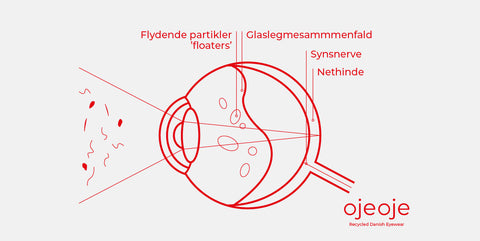
'Eye floaters', also known simply as 'floaters', are small clumps of protein and cells in the vitreous humour. When light hits them, they cast shadows on the retina, and these shadows are what you see as 'floaters', small diffuse spots, lines, or small cobweb-like figures. You cannot focus on the 'floaters' because they float around in the fluid of the vitreous humour and move with the slightest eye movements, and they may seem to 'flee' when you try to focus on them. 'Floaters' can cause significant visual disturbances, but are often quite harmless.
Why do you see diffuse lines and small dots?
There are several reasons why you see 'eye floaters', but the most common is age-related changes in the vitreous humour. This typically starts in your mid-40s or early 50s, although it varies from person to person. The vitreous humour becomes less gel-like and more fluid, causing small particles like proteins and cells to clump together and float around – and it's their shadows you see as 'floaters'. Discover the most common causes of 'floaters':
• Age-related changes – a completely natural process that starts as early as your 40s.
• Nearsightedness – if you are nearsighted, you are more likely to experience 'eye floaters'.
• Eye injuries or surgeries – eye surgery can trigger 'floaters'.
• Eye inflammation – inflammation can release cells into the vitreous humour.
• Haemorrhages – blood in the eye can create the same disturbances.
When should you be concerned about 'floaters'?
'Eye floaters' are in most cases completely harmless. However, if you suddenly see many more than usual, or you experience other visual disturbances such as flashes of light or blurred vision, you should take it seriously. See an ophthalmologist immediately if you...
... suddenly see more and clearer 'floaters' than usual.
... experience flashes of light like small lightning bolts or blinks.
... feel a shadow or curtain spreading across your field of vision.
... experience blurred or decreased vision.
These symptoms can be signs of posterior vitreous detachment or, in the worst case, a retinal detachment, which requires prompt treatment.
When will you experience 'eye floaters'?
You can experience 'floaters' regardless of your age, but you will have a higher risk if:
• You are over 50 years old.
• You are nearsighted.
• You have had eye injuries or eye surgery.
• You have diabetes or high blood pressure.
• You suffer from inflammatory conditions in the eye.
So it's completely normal, and you don't need to worry just because you notice them – but it's important to be aware of changes.
What can you do about the disturbances?
In the vast majority of cases, 'eye floaters' require no treatment. Your brain will eventually get better at ignoring them – a process called neuroadaptation, where the brain adapts to changes in sensory input, such as vision. Discover 3 things you can do:
1. Train your attention away from 'floaters'. The less you focus on the 'floaters', the less they will bother you. Your brain will gradually learn to ignore them.
2. Move your eyes. If you quickly look up and down or from side to side, you can sometimes get the 'floaters' to move out of your central field of vision.
3. Consider treatment (in rare cases). If the 'floaters' become very bothersome and affect your quality of life, there are two treatment options:
• Vitrectomy: An operation where the vitreous humour is removed and replaced with a clear fluid. This is only used in severe cases, as it carries risks.
• Laser treatment (YAG laser): A newer method that attempts to break down the floating particles. The effect varies, and it is still a new treatment.
What should you do if you see flashes of light?
Flashes of light are quite different from 'floaters'. If you suddenly see flashes at the edge of your vision, it could be due to the vitreous humour pulling on the retina. This typically happens when the vitreous humour detaches from the retina – something that can occur naturally, but in rare cases leads to tears. If you see flashes of light along with 'floaters', it is important that you get examined as soon as possible.
Why do you see 'floaters' more clearly in certain situations?
You notice 'floaters' most when you look at a bright, uniform background. This could be the sky, a white wall, or a brightly lit screen. In the dark, you notice the small dots less because the contrast is lower, and the brain doesn't see them as clearly.
How can you prevent 'floaters'?
You cannot always avoid getting 'eye floaters', especially if it's due to age or nearsightedness. But you can strengthen your eyes by...
... eating a healthy diet with a focus on vitamins A, C, and E, zinc, and omega-3.
... wearing sunglasses as they protect your eyes from harmful UV rays.
... monitoring your blood pressure and blood sugar, especially if you have diabetes.
... having your eyes checked regularly if you experience changes.
... avoiding smoking as it increases the risk of eye diseases in general.
What can you do yourself about 'eye floaters'?
'Floaters' can be annoying and disruptive, and fortunately, there are things you can do to reduce the discomfort:
• Take breaks from screens and reading, as this relieves your eyes.
• Adjust light and contrast on your screen, as this can make 'floaters' less visible.
• Exercise as good blood circulation is good for the eyes.
• Get good sleep, as your eyes recuperate at night, just like the rest of your body.
• Be patient as your brain will get used to 'floaters' over time.
Do 'floaters' and the need for reading glasses go hand in hand?
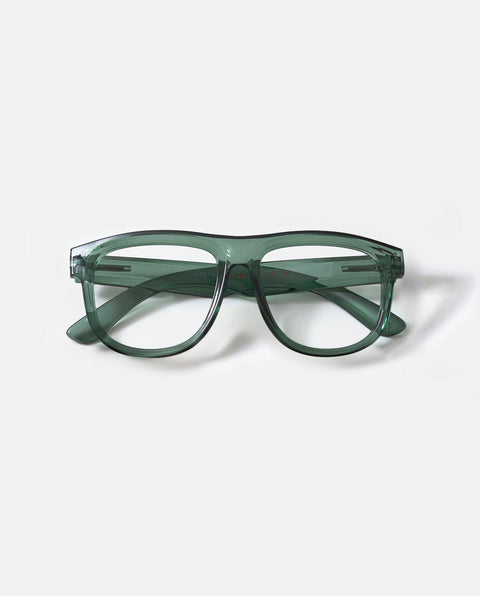
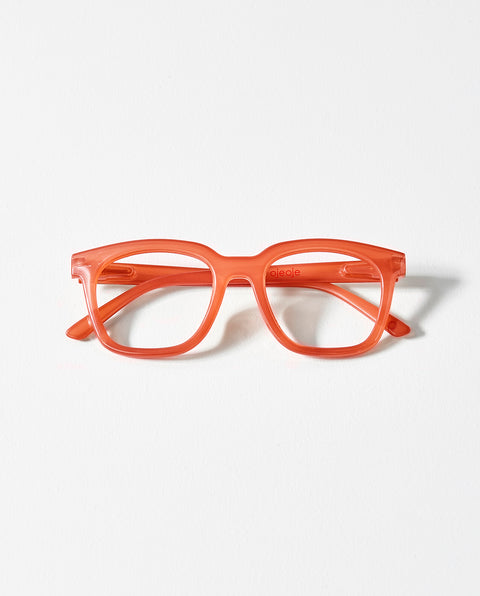
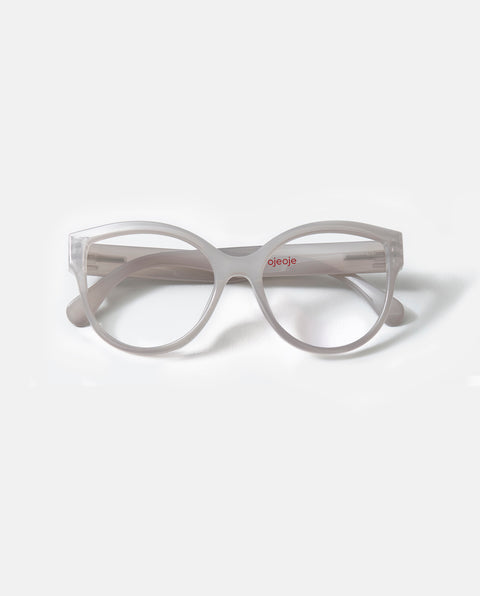
Perhaps you've noticed that 'eye floaters' and the need for reading glasses often appear around the same time – typically between 40-50 years of age. This is no coincidence. With age, your lens becomes less flexible. This makes it harder for you to focus on texts and nearby objects (presbyopia) – and that's why you suddenly need reading glasses, even if you may have had perfect vision your entire life. Discover our wide selection of recycled reading glasses.
Listen to your eyes
'Eye floaters' are usually completely harmless and a natural sign that your vision is changing with age. But your eyes are good at sending you signals if something isn't right. If you experience sudden changes, flashes of light, or decreased vision, don't hesitate to seek help. In rare cases, it can be a sign of something serious – and the sooner you react, the better.
Short questions/answers:
What are 'eye floaters'?
Shadows from particles in the vitreous humour of the eye.
Why do you see them?
Age-related changes, nearsightedness, etc.
When should you react?
Sudden changes, flashes of light, and vision loss.
What can you do?
Train your brain, move your eyes, seek medical attention if needed.
Is it dangerous?
Usually not – but pay attention to signals.